
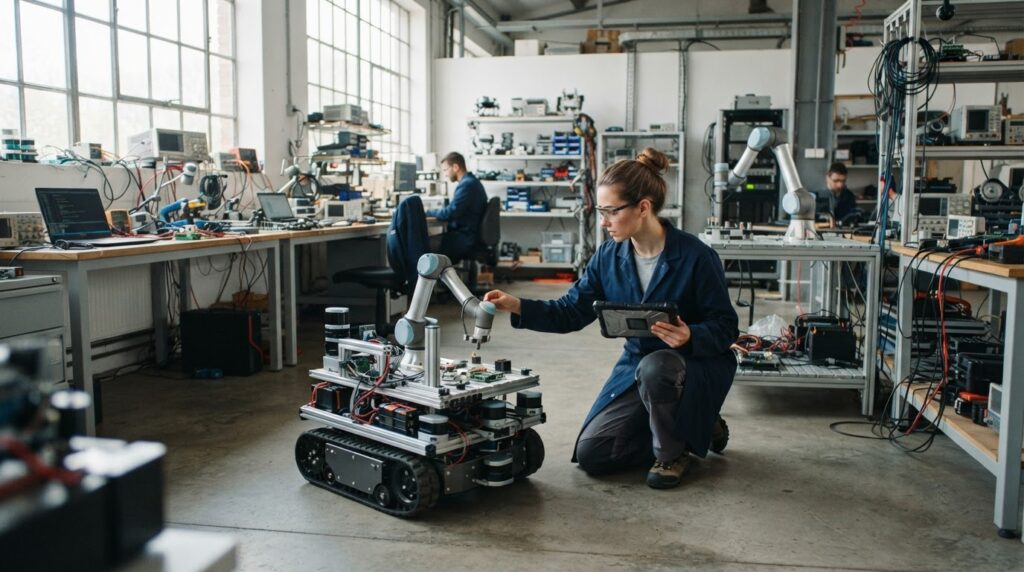
Robots are moving beyond carefully controlled demonstrations into warehouses, factories, public spaces, and homes. Building them requires more than an AI model: sensors, motors, connectivity, real-time control, safety, and security all have to work together. NXP’s November 9, 2026 announcement targets that integration problem with a unified robotics platform.
What NXP is building
NXP says the platform is built on its Neural Axis Architecture and combines AI processing, connectivity, motor control, security, and energy management. It includes a modular, open-source software development kit and ready-to-use reference designs, along with pre-validated subsystems intended to work together.
The first example highlighted in the announcement is a drone. NXP says developers can get an initial drone function running in 30 minutes out of the box, then add capabilities such as AI perception, flight control, and navigation using the SDK and reference designs. The company says support will expand to service robots and autonomous systems.
Why an integrated platform matters
Robotics teams often have to combine components from different suppliers and validate that they behave reliably together. NXP says this integration and validation work can take months, and that its pre-integrated approach aims to reduce the effort to days or weeks. That is a vendor estimate, not an independently measured result across all robot designs.
The trend is part of what companies call physical AI: AI systems that sense and act in the real world through machines. Unlike software agents that operate only on digital information, robots have to respond to physical conditions, meet safety requirements, and keep operating despite network or sensor issues. Real-time control and dependable hardware therefore matter alongside model quality.
What developers should evaluate
The announcement is a platform launch, not evidence that every robot can now be built quickly or safely. Teams should check supported hardware, software licensing, cybersecurity updates, safety certifications, component availability, and how much of their existing design the SDK can reuse. They should also test each robot in realistic operating conditions.
NXP’s update reflects a broader shift: robotics development is becoming more about complete, validated systems than isolated chips. Whether the platform saves time in a specific project will depend on the use case and the maturity of its software and partner ecosystem.
Primary source
NXP’s November 9, 2026 robotics platform announcement (PDF).