
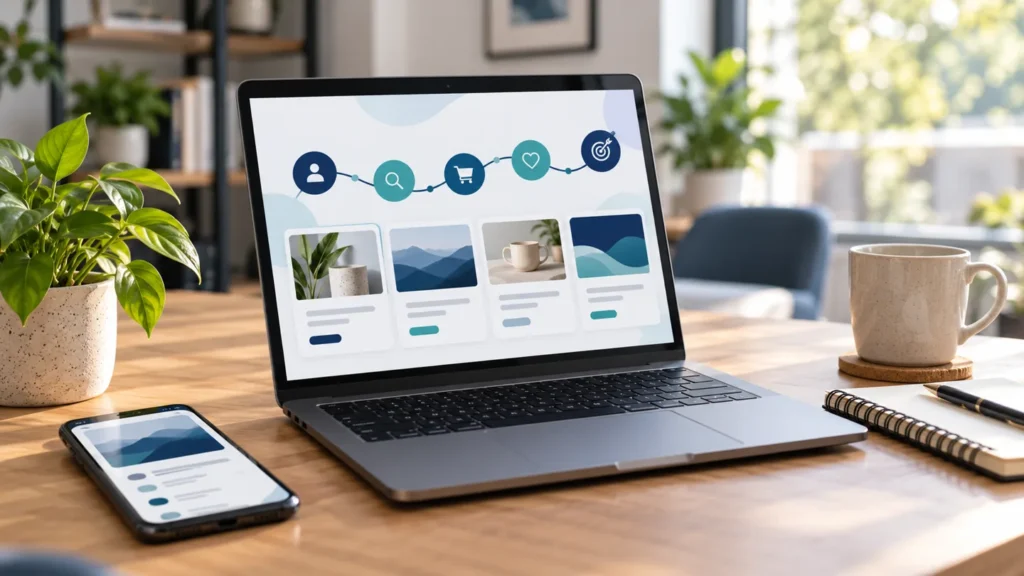
A potential customer might read your post, visit your website and leave without getting in touch. Where did the conversation stop? A digital marketing funnel helps you examine that journey, from the first useful answer to an enquiry and a buying decision. It gives you a practical way to find the step that needs attention.
For a small service business, the useful question is simple: can a potential customer find a relevant answer, understand your offer and contact you without unnecessary effort? Build your funnel around that journey.
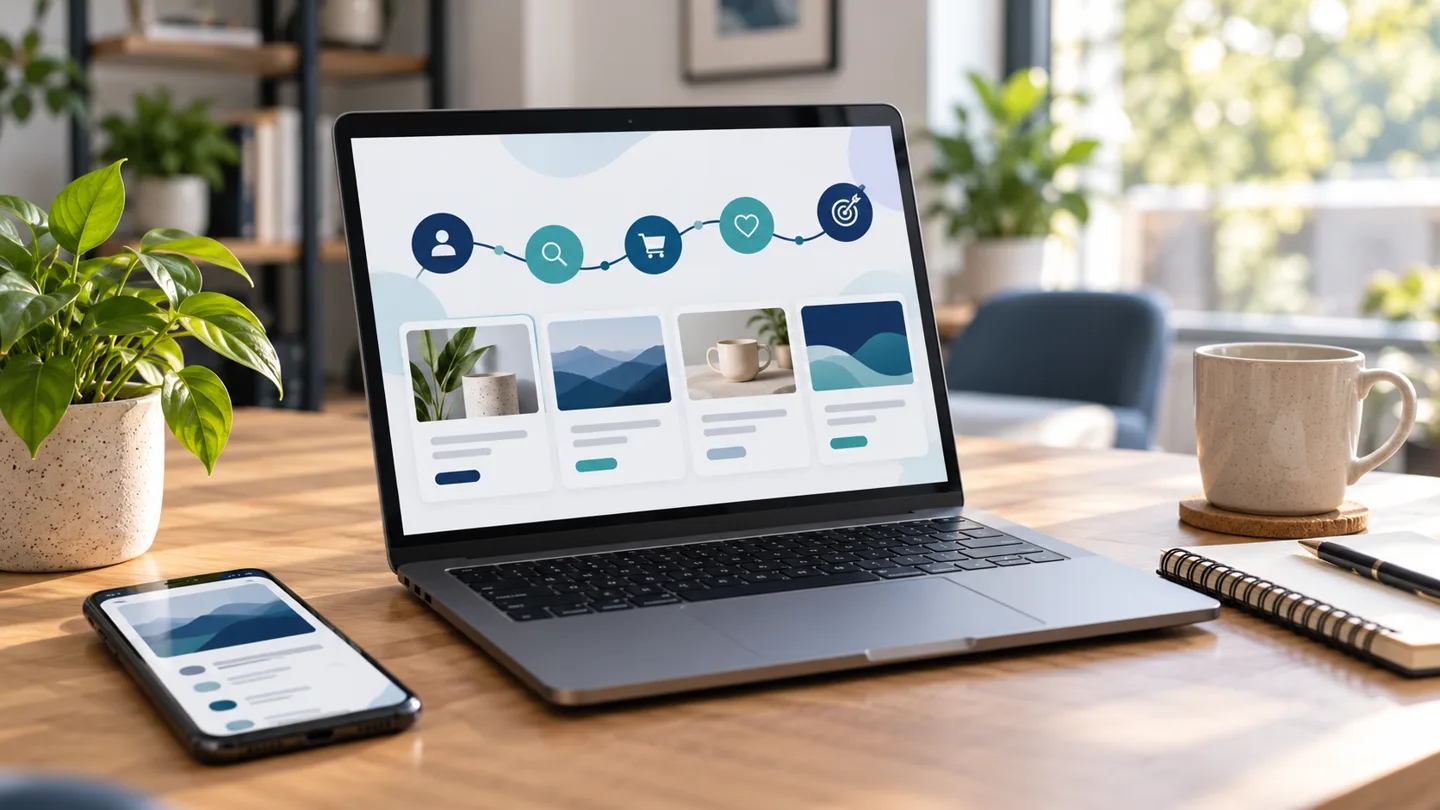
1. Define the enquiry you actually want
Choose a primary action such as submitting a consultation request, calling your business or sending a message. Then define a qualified enquiry: someone seeking a service you provide, within an area you serve, with a need your business can reasonably address.
Keep button clicks and completed enquiries separate. Opening a messaging app does not prove a message was sent, and opening a form does not mean it was submitted. Record confirmed leads where possible rather than treating every interaction as a customer.
2. Attract people with the right questions
Create content that matches a buyer’s stage. Someone learning about websites may need a guide to choosing pages and features. Someone comparing providers may need examples, scope and an explanation of the process. Someone ready to act needs a clear service page and contact option.
For example, a website design business could publish a planning checklist, link it to a service page and invite readers to request a consultation. Each step should answer the next likely question instead of sending every visitor to a general homepage.
3. Build a landing page around one offer
Match the page to the message that brought people there. If a post discusses business website design, the destination should explain that service. Include a specific headline, who the service suits, what it includes, real examples and one prominent next step.
Explain important limits and avoid unsupported guarantees about rankings, sales or delivery. Ask only for information needed to respond initially. On a phone, check that text is readable, buttons work and the enquiry form can be completed without awkward zooming.
4. Make follow-up part of the funnel
Decide who responds, what information they need and how an enquiry moves toward a quote or booking. A small lead log can record the enquiry date, requested service, source when known, current status and next action. Limit access to the people who need it.
Use a helpful first response that answers the person’s question and explains the next step. Do not automatically add every enquirer to a marketing mailing list. Make subscription choices clear and respect the permissions and preferences people provide.
5. Measure the whole journey
Use a consistent campaign naming convention and campaign links to distinguish traffic sources. Record visits, confirmed enquiries, qualified enquiries and sales as separate stages. Different reporting systems can credit the same customer differently, so reconcile marketing reports with your lead and sales records.
Three calculations help identify where to investigate. Landing-page enquiry rate is enquiries divided by visits. Cost per qualified enquiry is relevant marketing spend divided by qualified enquiries. Lead-to-customer rate is customers divided by qualified enquiries. Use the same date basis and allow time for leads to become customers.
Illustrative example: 200 visits generate 10 enquiries, six of which qualify, and two later become customers. The enquiry rate is 5%. That does not tell you whether the campaign is profitable; you still need acquisition costs, sale value and delivery costs.
6. Improve the weakest step
If few people reach the page, review distribution and audience relevance. If visitors leave without enquiring, review the offer, page clarity and technical usability. If qualified leads fail to buy, examine response time, suitability, pricing and the sales conversation.
Test a meaningful change and record the date. Avoid declaring a winner after a handful of visits, and account for changes in traffic mix. A clearer funnel gives you better questions to investigate; it does not remove the need for judgment.
Start with your marketing strategy, browse more Digital Marketing guides, or review our services for help connecting your content and enquiry journey.
Follow one person through the journey
Imagine a hypothetical business owner reads your website-planning guide and wants to know whether you can help. A relevant service link should explain what you provide, who it suits and how to discuss the project. If the link leads to a page with no clear offer or working contact route, the next step becomes harder.
Walk through that sequence on a phone and complete the enquiry process yourself. Then check who receives the message and what happens next. This exercise connects content, usability and follow-up in a way that a visit count alone cannot.
Sources and further reading
Google Analytics documentation distinguishes specific events, such as link clicks, from other interactions. This guide applies that distinction to enquiry tracking. The funnel workflow is a practical planning approach; its examples are hypothetical and do not establish expected campaign performance.
Google Analytics: About events. For page clarity and image accessibility, see Google Search Central: SEO Starter Guide. Consulted 29 October 2026.